
sound · headphones
The Pulse
Listen as two nearby tones create a steady pulse. Wear headphones: each ear gets its own tone, and the pulse forms between them.
Hear the pulseSimple rules. Unexpected beauty. Explore the patterns, then consider what makes something unmistakably itself.
Tap anywhere to send a wave.
The number sets where the waves start and how they're tuned. The same number always sets up the same pattern; it keeps moving, and your taps change it.
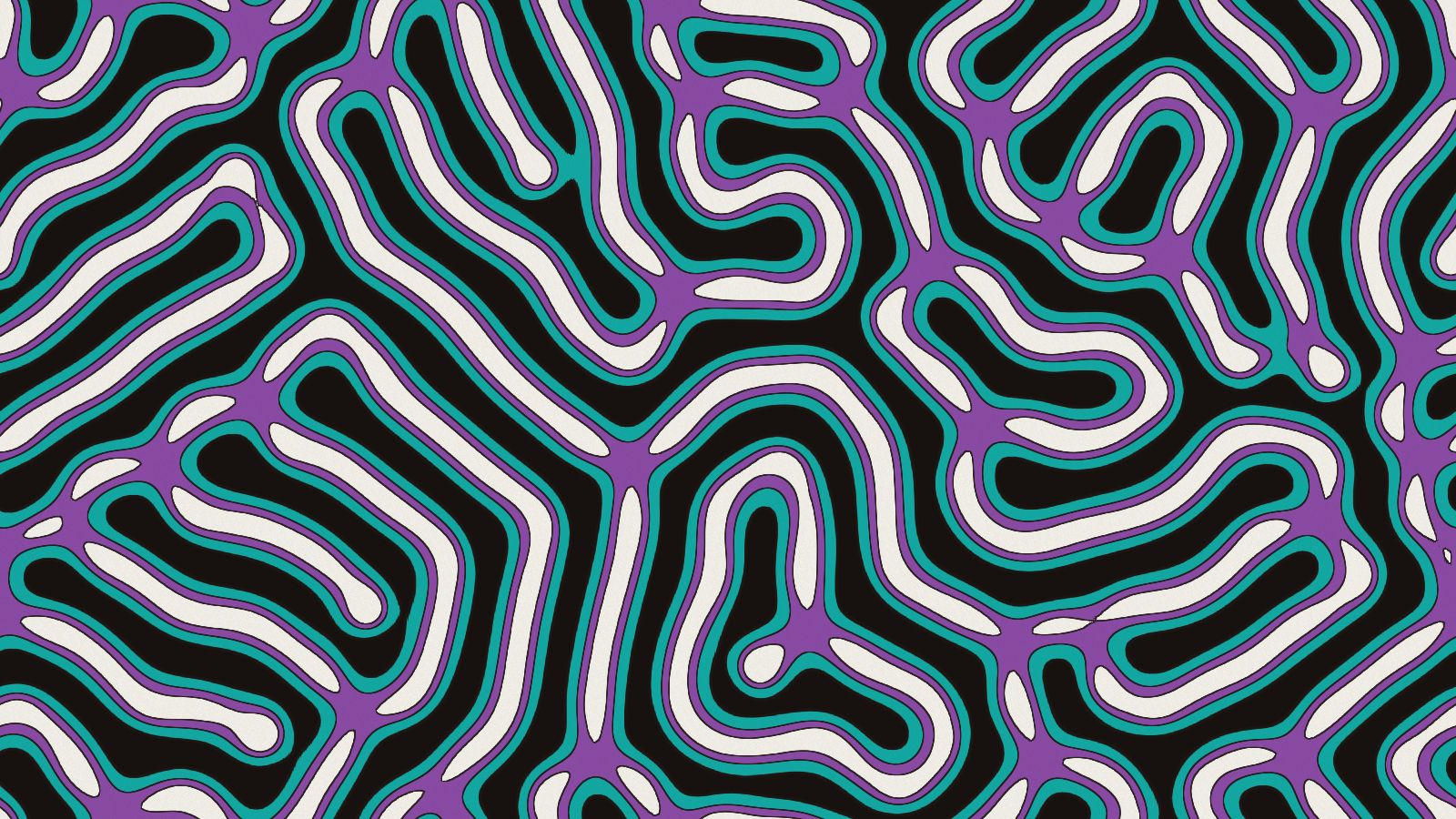
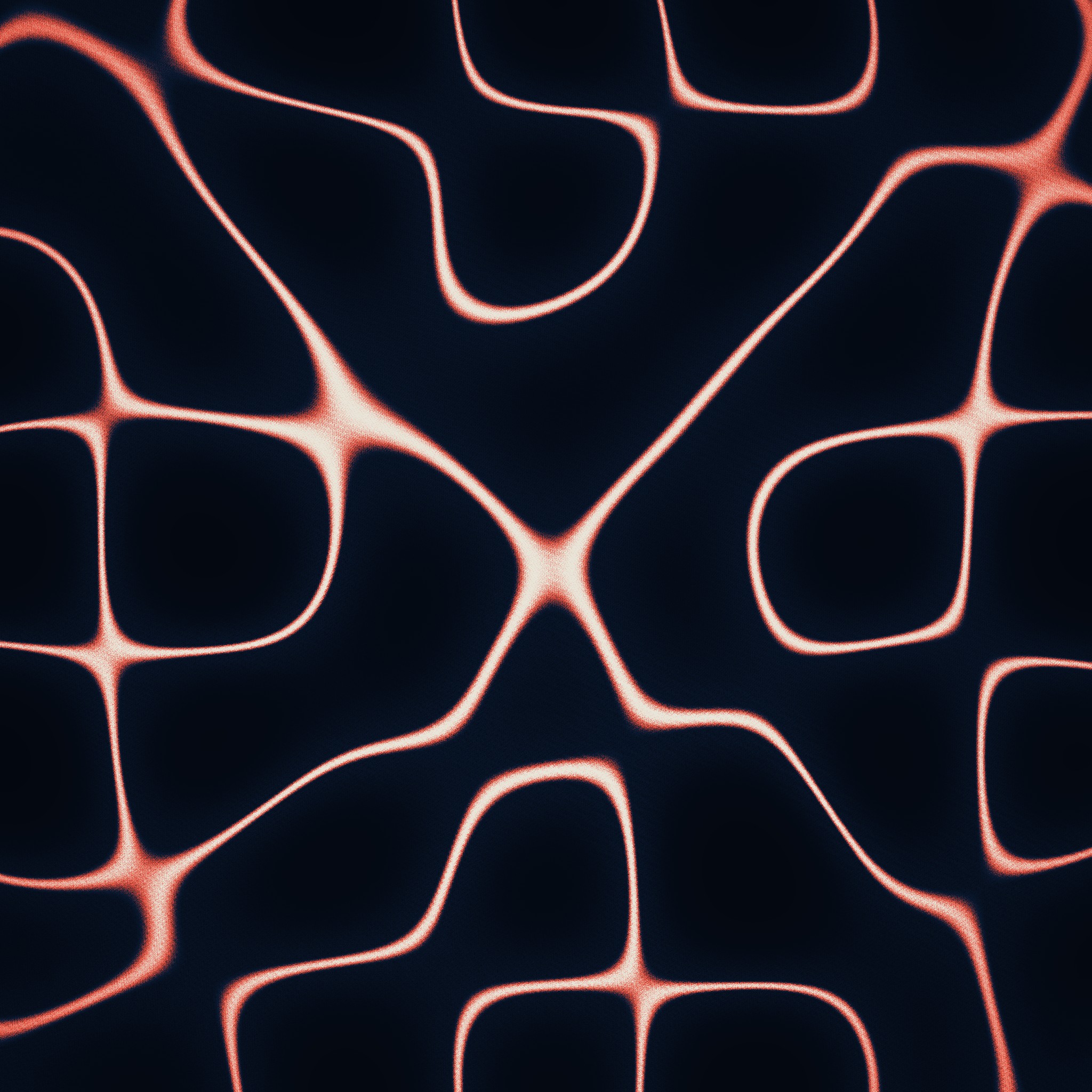
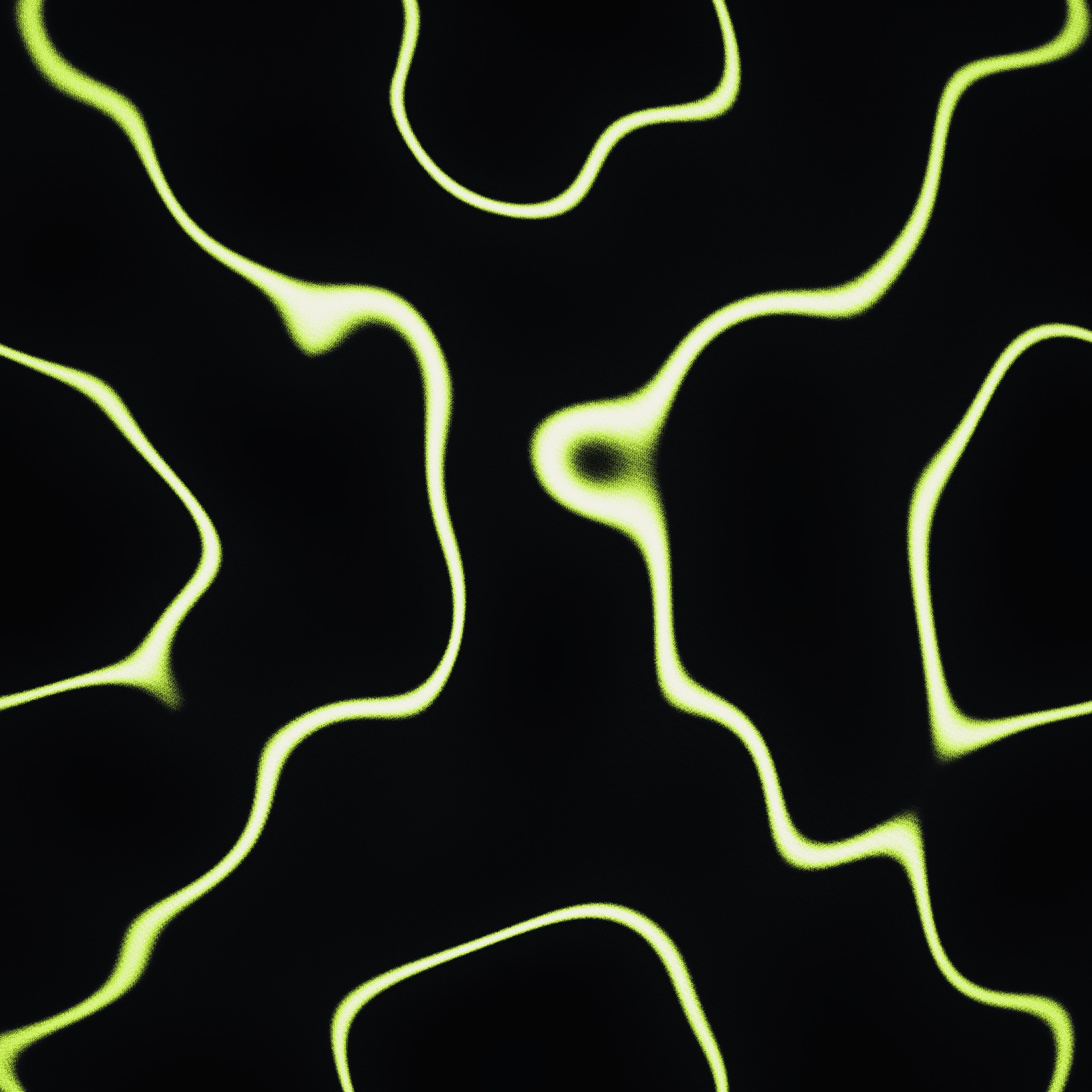
Stripes grow on their own from two virtual chemicals, then drift and fold around each other. Draw a line through them and watch them bend around it. Switch on glow, make the stripes fine, and save the picture when you love it.
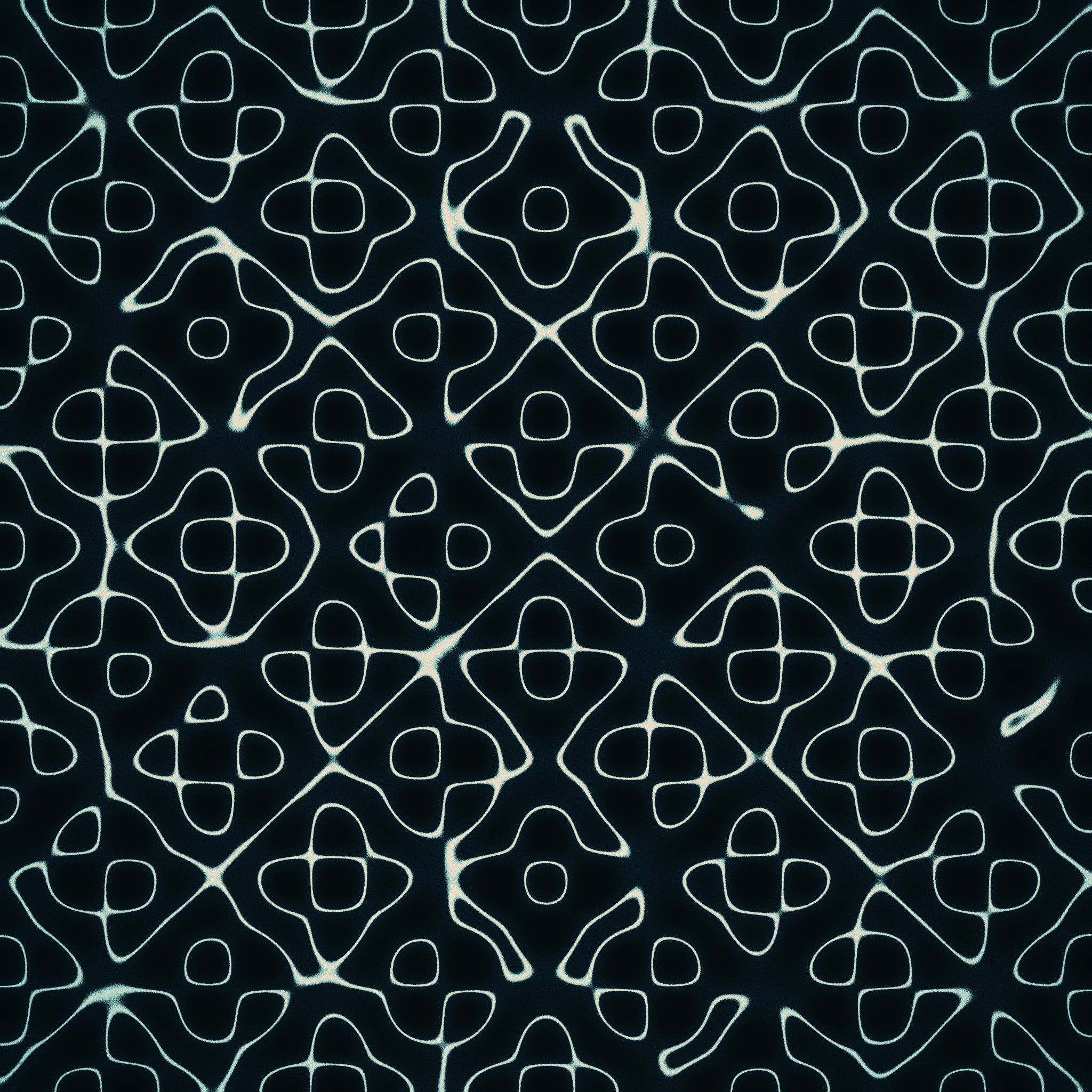
Draw on itOn a vibrating plate, sand moves away from the parts that shake and gathers along the lines that stay still. Change the vibration, and a different pattern can appear. Ernst Chladni made these figures famous in 1787 by drawing a violin bow along sand-covered metal plates.
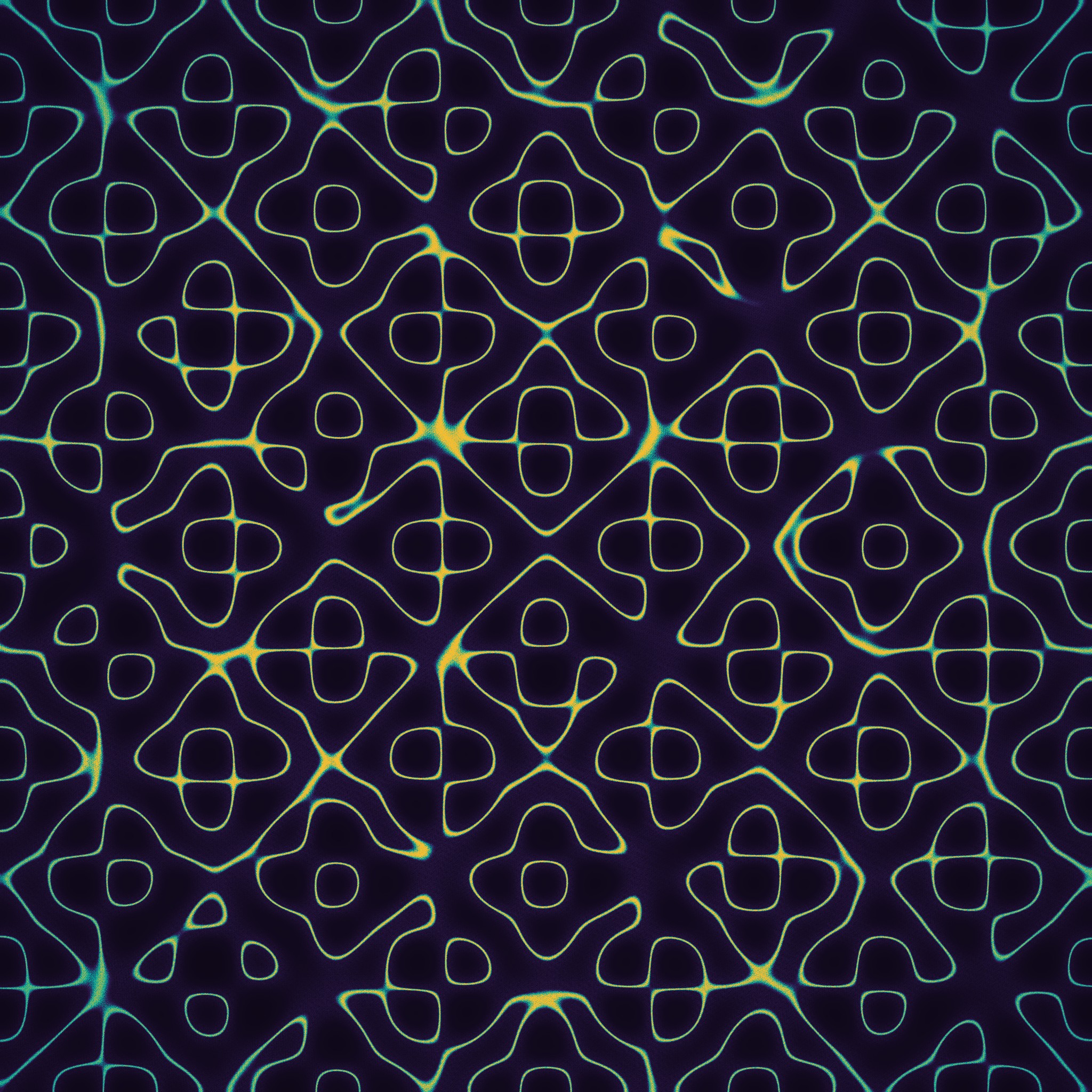
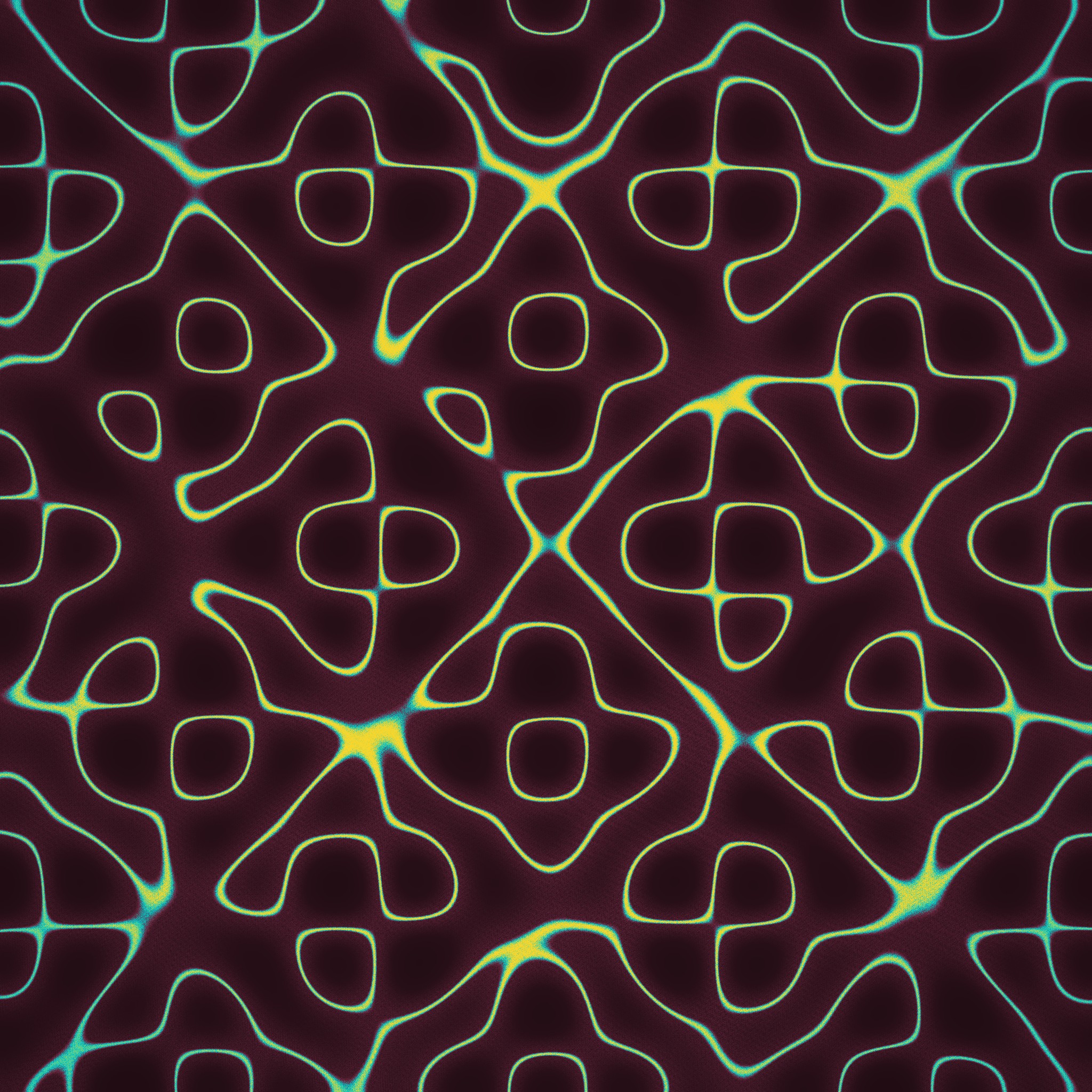
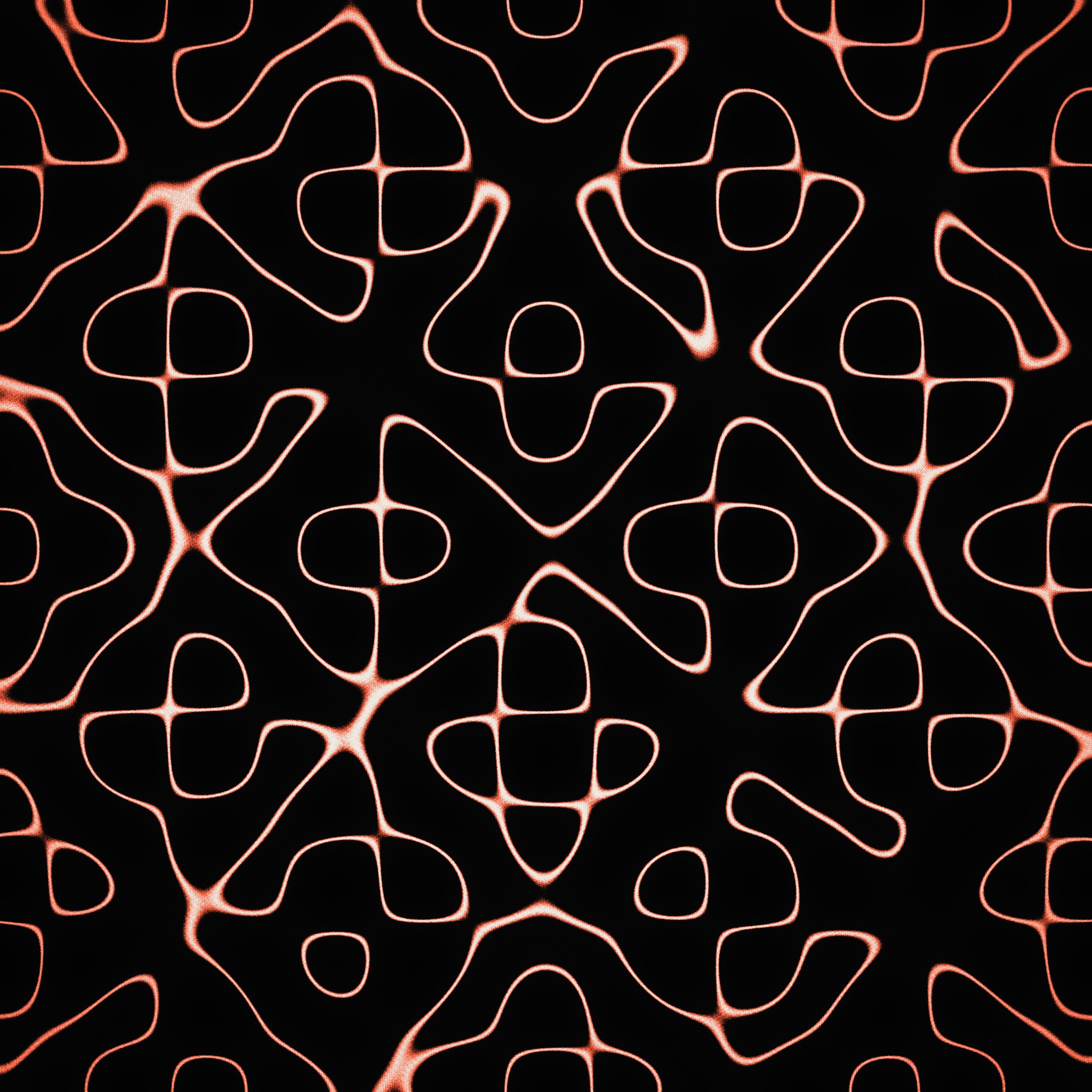
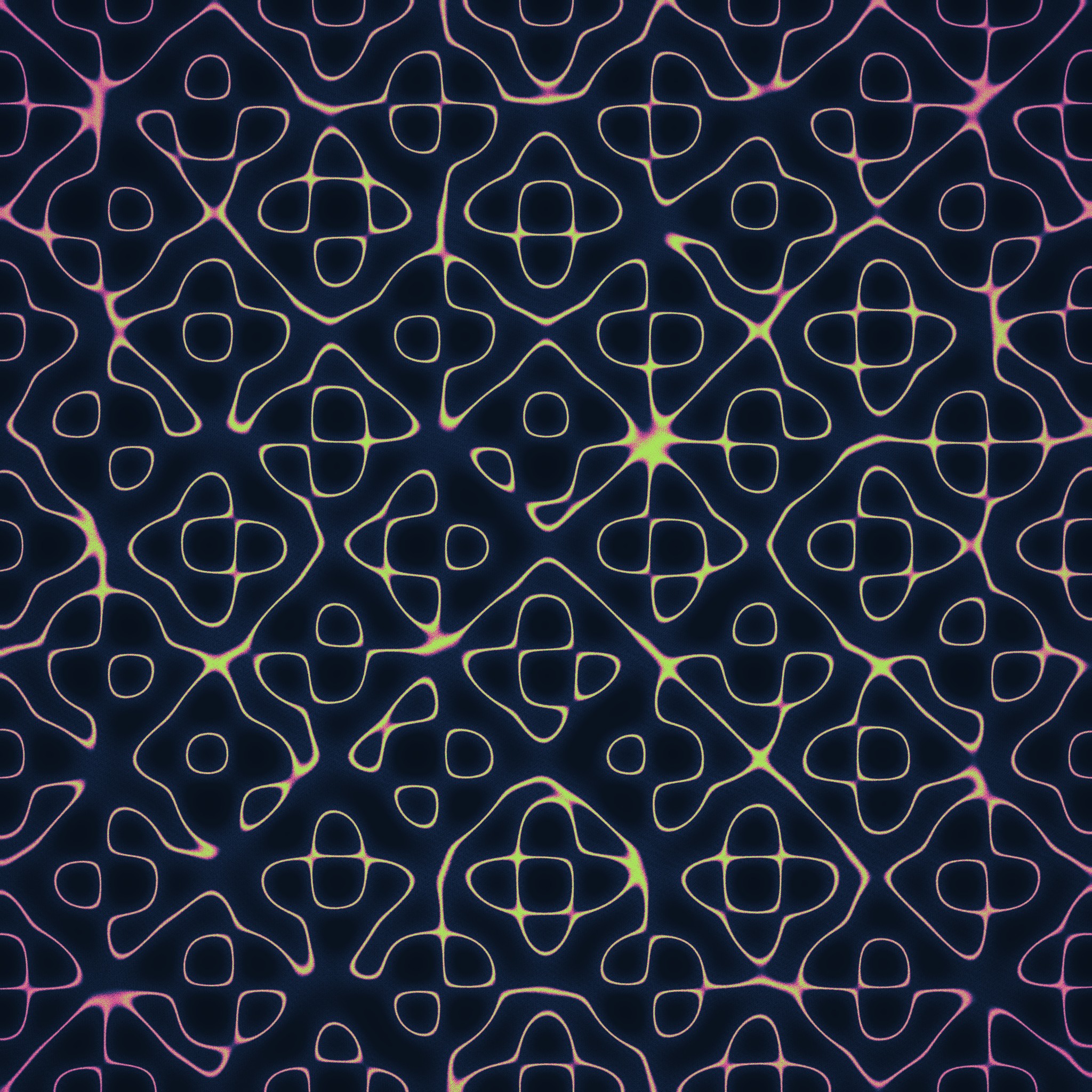
This plate is a mathematical visualization inspired by his experiments, not a model of a real metal plate. It blends five idealized vibration patterns, each strongest at its own pitch, and thousands of virtual sand grains drift toward wherever the blend holds still. The moving pattern at the top of the page is built the same way: waves spread from eight points and mix with a plate pattern, and the bright lines mark where they cancel.
Slide to change the pitch. Near five pitches a pattern locks in; between them, the sand stays loose.
Sand gathers wherever the plate holds still.
Each of the five patterns uses the classic textbook approximation for a square plate:
The sand gathers where ψ = 0. The animated plate slowly shifts between the + and − forms, so a pattern can change shape while the pitch stays put.
Each pattern's pitch comes from one rule:
| Pattern | n² + m² | Pitch |
|---|---|---|
| (1,2) | 5 | 30.90 Hz |
| (2,3) | 13 | 80.34 Hz |
| (3,5) | 34 | 210.12 Hz |
| (5,8) | 89 | 550.02 Hz |
| (8,13) | 233 | 1439.94 Hz |
Each pair is two neighboring Fibonacci numbers, and for those pairs n² + m² is also a Fibonacci number. That follows from the pairs this model uses; real plates have no preferred Fibonacci frequencies. The 6.18 Hz is this model's scale factor, chosen to echo the golden ratio, not a physical constant.
Each pattern responds most strongly at its own pitch and fades as you move away. The pitch slider covers 21 to 1,597 Hz on a logarithmic scale and snaps to a pattern within about 6% of its pitch.
Wave mathematics also helps us understand atoms. Electrons are described by wavefunctions that tell us where they're likely to be found. Those patterns help explain how atoms form bonds.
A pattern takes shape from the rules behind it. That offers a useful way to think about identity.
For a person or a business, start with what's already true: what you care about, how you work, and what people can depend on you for.
Let that shape how you show up.
Further reading: "ghost in the machine", a two-act story about a body deciding what counts as itself.
Five experiments in sound, motion, and pattern. Still evolving.
Listen as two nearby tones create a steady pulse. Wear headphones: each ear gets its own tone, and the pulse forms between them.
Hear the pulseWatch 34,000 particles drift through a slowly turning cube toward the quiet spots of a three-dimensional wave pattern, or gather on a glowing gyroid lattice. Drag to turn it, and pick its colors.
Explore the cubeSteer a glowing whirlpool and pick its colors. Change its speed, move its center, or reverse its direction. Its 2,584 particles are spaced by the golden angle.
Steer the vortexTwo virtual chemicals react and spread at different speeds, and stripes form on their own: a Turing pattern. Each stripe is drawn in three bands from fourteen color palettes, and a slow drift keeps them traveling and folding around each other.
Grow the stripesAdam Gurley's own AdamsLocal skull, with three virtual chemicals living in its shadows. Each one feeds on the next, like rock, paper, scissors, so their waves chase each other into spirals. Tap to stir in more, or save a picture.
Meet the skull
A poster you can play. Tune a real tone and watch its wave, add a second wave to see the two add up or cancel out, and walk between two speakers to find the loud and quiet spots. Sound starts only when you tap.
Enter the fieldEight patterns to keep, print, or share. Free for personal use.

Want to use a pattern for a business, product, or website? Just ask: adam@adamslocal.net.